
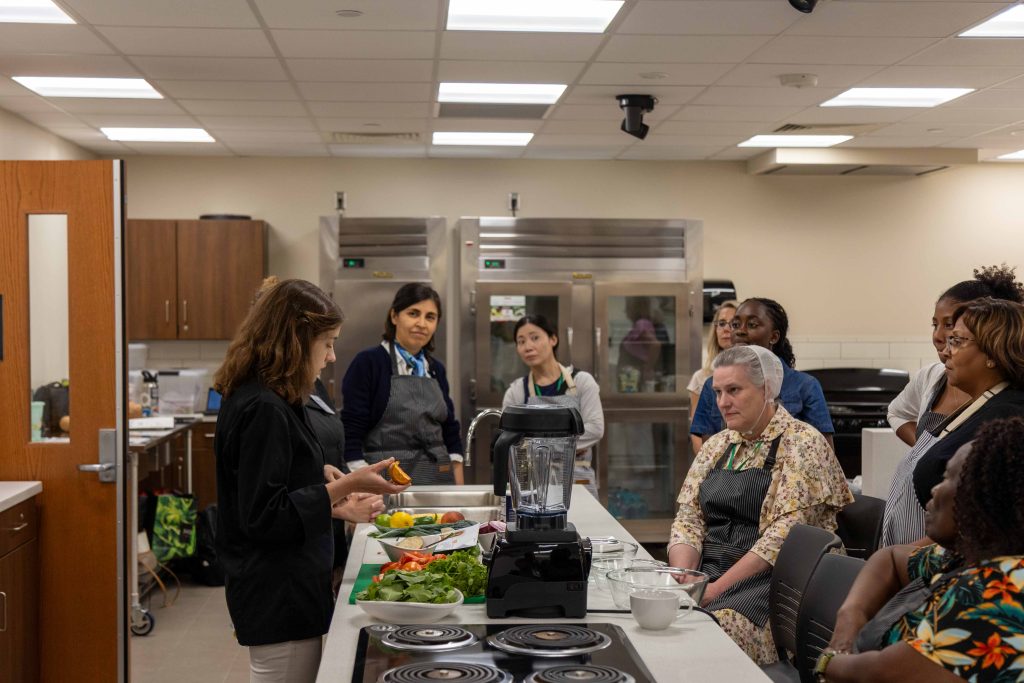
The Society for Nutrition Education and Behavior (SNEB) has long been a leader in advancing food and nutrition education. With an established annual conference and dedicated membership, the organization is no stranger to large-scale event planning. But like many associations, SNEB faced a common challenge: managing complex speakers and abstract submissions across multiple platforms, resulting in time-consuming, manual processes for both staff and participants.
In 2024, SNEB took a major step toward improving that experience by implementing a new abstract and speaker management system—streamlining operations, improving the user experience, and freeing up staff time for income-generating priorities like sponsorship and exhibits.
Moving to a Unified, User-Friendly Platform
Under the guidance of Nicole Brandt, CAE, HMCC, SNEB made the decision to consolidate their abstract, speaker, and session management workflows into one integrated platform: Cadmium. Previously, the team had relied on multiple tools and manual processes, which not only consumed significant time but also created friction for users submitting abstracts or preparing to speak at the conference.
Cadmium offers purpose-built products for associations, designed to support the full lifecycle of events, continuing education, and content delivery. In this case, the Cadmium platform offered a modern, automated solution that dramatically improved efficiency while maintaining a professional and intuitive user interface for submitters, reviewers, and staff alike.
“It’s a more expensive tool than what SNEB had used previously,” Nicole noted, “but the time savings for staff and the improved experience for attendees made it well worth the investment.”
Operational Gains That Create Strategic Value
The switch to Cadmium wasn’t just a technical upgrade; it created immediate operational benefits. Cadmium gave abstract reviewers a more seamless experience; speakers found the submission process clearer, and staff spent far less time troubleshooting data.
Perhaps most importantly, the time saved allowed the SNEB team to shift their attention toward revenue-generating opportunities. With fewer resources tied up in manual tasks, they were able to invest more energy into building sponsorships and enhancing the exhibit experience.
Smart Planning for Long-Term Impact
Implementation was thoughtfully planned, allowing the platform’s cost to be integrated into the organization’s regular budgeting process. Nicole and the SNEB Meetings Director, Paul Bierman, worked closely with the Cadmium team to tailor a contract that fit the organization’s needs, including securing a multi-year discount and locking in rates to avoid unexpected increases in the future.
“We didn’t treat it as a one-off investment,” Nicole explained. “We positioned it as a long-term operational improvement that would continue to pay off over several meetings.”
Measuring Success: Time Saved, Questions Reduced
The early indicators of success have been clear. Staff are spending less time managing the process, and the volume of attendee questions about submissions has dropped—evidence that the platform is intuitive and well-received.
“It’s not just about staff efficiency,” Nicole said. “We’ve seen a measurable improvement in the user experience. That means fewer barriers for participants and a smoother conference overall.”
A Culture of Continuous Improvement
Even with a longstanding client like SNEB, improvement is always an ongoing goal. The success of this project reflects a mindset focused on continuous evaluation, proactive problem-solving, and strategic decision-making. Instead of maintaining the status quo, the team looked critically at where time and energy were being spent—and chose a solution that not only streamlined operations but also positioned the organization for stronger engagement and growth.

Nicole Brandt, CAE, HMCC
Nicole Brandt joined RGI in 2024 as Executive Director. She has a BA in Interactive Multimedia and Graphic Design from Columbia College and a Certificate in Non-Profit Management from the Indiana University Lily School of Philanthropy.
She brings over 17 years of experience in non-profit management where she has successfully led seven scientific and academic associations. Previously, she served as the leader of an international NGO focused on supporting orphaned children in Africa and Central America. Alongside her work with associations, Nicole has a strong background in the research and medical industry.