
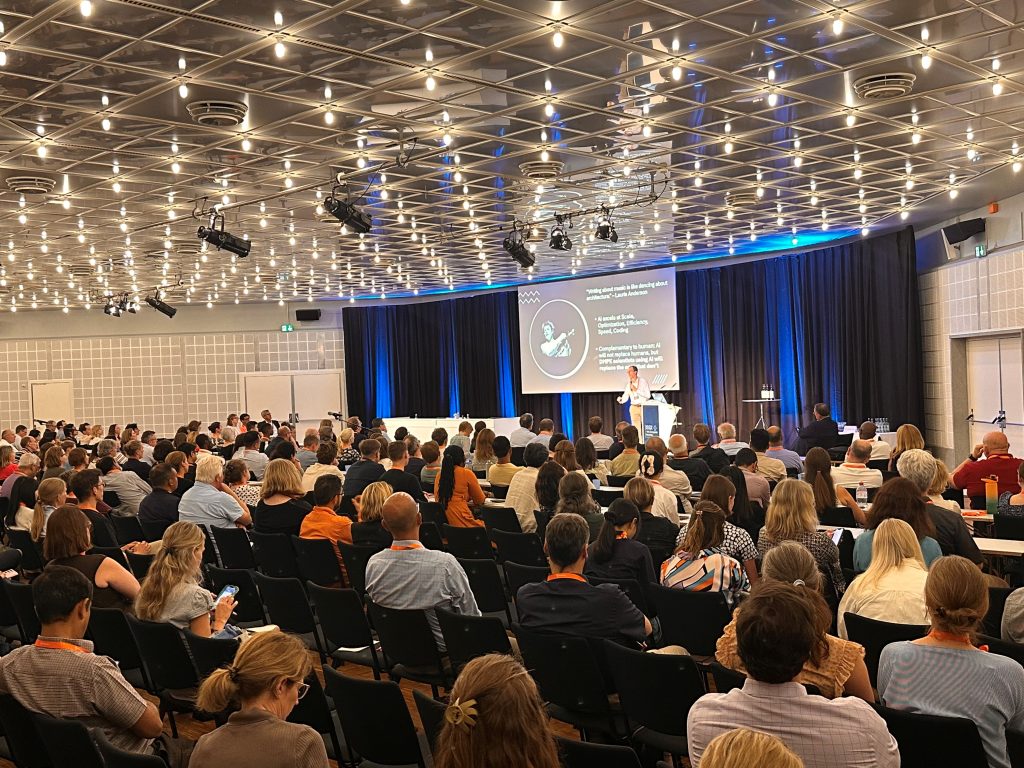
Planning an international conference is one thing. Experiencing it onsite is another.
Last month we shared our guide to planning international meetings before departing for the 16th European ISSX Meeting in Basel, Switzerland. That post focused on the planning process, from navigating VAT and currency considerations to understanding cultural differences and coordinating logistics from thousands of miles away.
Now that we’re home, we wanted to share the lessons that only come from being onsite. While many of our pre-planning assumptions proved true, there were some surprises, best practices, and small details that will absolutely shape how we approach future international meetings.
Time Zones Matter More Than You Think
One of our biggest takeaways wasn’t about attendees – it was about support.
We worked with two U.S.-based vendors onsite: one providing registration badge printing supplies and another supporting our mobile app. Our badge printing vendor offered 24/7 technical support, while the mobile app provider operated only during U.S. business hours.
Fortunately, we didn’t experience any major issues, but the few questions and updates we needed couldn’t be resolved until several hours later because our workday in Switzerland was already halfway over when they were just logging on.
If you’re partnering with vendors based in another time zone, consider purchasing extended or after-hours support if it’s available. Even if you only need assistance once or twice, having someone available during your event hours can save valuable time and reduce stress.
The same lesson applies to your internal team. Before the meeting, we debated whether someone back in the U.S. should temporarily shift their schedule to align with Basel business hours. Ultimately, we decided against it.
In hindsight, we’ll absolutely do it next time.
Having a team member available during the conference day to monitor a shared inbox, make mobile app updates, and handle administrative tasks in real time would have allowed the onsite team to stay focused on attendee experience rather than juggling remote responsibilities. Nothing fell through the cracks but having that extra layer of support would have made operations run even smoother behind the scenes.
European Convention Center Service Exceeded Expectations
One of the highlights of the meeting was working with the venue staff.
The convention center’s audiovisual team was exceptional. Rather than relying on outside contractors, the AV technicians were employees of the convention center who knew every room, cable, microphone, and display inside and out. They were proactive, responsive, and genuinely invested in making every session successful.
Even more impressive, many items we typically budget as AV add-ons in the U.S.—speaker timers, confidence monitors, presentation support, and other standard meeting technology—were already included in the room rental. While those costs are undoubtedly reflected somewhere in the overall pricing, having everything ready to go simplified planning and eliminated countless line items during budgeting.
The catering team was equally impressive. Food service ran with incredible precision, with breaks opening and closing exactly on schedule. While we appreciated the efficiency, it did require us to stay mindful of our program timing. If a session ran long, or occasionally ended early, we had to work quickly to ensure attendees still had the opportunity to enjoy the refreshments before service concluded. Beyond the schedule, the level of hospitality was exceptional. Staff regularly circulated through networking areas serving beverages on trays to reduce lines, refreshed stations proactively, and even brought refreshments directly to our registration desk so our team could refuel without stepping away from assisting attendees.
Another pleasant surprise was that coffee breaks weren’t simply coffee breaks. Standard break packages included pastries or snacks alongside beverages, creating a more welcoming networking environment for attendees.
Sometimes it’s the small service touches that attendees remember most.
Sustainability Is Expected, Not Just Encouraged
Europe’s commitment to sustainability was immediately noticeable, and it extended into nearly every aspect of meeting operations.
Coffee and beverage service used reusable cups rather than disposable products. Meals and breaks were served on real glassware, plates, bowls, and silverware instead of disposable alternatives. These weren’t premium upgrades, they were simply the standard way of doing business.
Another adjustment was building comfort expectations around the venue environment.
We happened to arrive during an early summer heat wave, and it quickly reminded us that air conditioning in many European venues simply isn’t designed to the same standards as many attendees from North America may expect. While indoor spaces remained comfortable, they weren’t kept at the cooler temperatures many U.S. meeting planners are accustomed to.
Local Partnerships Can Improve the Attendee Experience
One of the best attendee benefits came from something we didn’t have to organize ourselves.
Through Basel’s convention bureau, hotel guests received complimentary public transportation passes valid for the duration of their stay. Attendees could ride the city’s trams throughout Basel, making it incredibly easy to travel between hotels, restaurants, and the convention center while exploring the city.
We heard consistently positive feedback about this perk, and it’s a great reminder to ask your destination marketing organization or convention bureau what benefits may already exist for conference attendees. Many cities offer transportation programs, visitor discounts, or other incentives that can significantly enhance the attendee experience.
Another decision that proved successful was not contracting a traditional hotel room block. Instead, the convention bureau curated a list of recommended hotels across multiple price points and neighborhoods. This provided flexibility for attendees—from students seeking affordable accommodations to professionals looking for full-service hotels—while also eliminating the financial risk of hotel attrition.
For this meeting, it was the right solution. Attendees appreciated having choices, and for the client, avoided the uncertainty that can come with international room block commitments.
Travel Smarter, Not Harder
International travel always comes with a learning curve, even for experienced travelers.
The biggest piece of advice? Stay awake after you arrive. It can be tempting to take a quick nap after an overnight flight, especially when your body insists it’s still the middle of the night. However, staying awake until local bedtime is one of the best ways to adjust to the new time zone. If you need a little help resetting your schedule, consider bringing a sleep aid that you know works well for you and is appropriate for your needs. We also found that, after long days onsite and the adrenaline of managing conference details, taking a small dose of a familiar over-the-counter sleep aid helped us wind down, fall asleep at a reasonable hour, and be ready for another early morning.
If possible, travel with only a carry-on bag. Navigating customs, trains, trams, and airports becomes significantly easier when you aren’t waiting at baggage claim or managing multiple large suitcases.
A few additional items we’ll never leave home without include:
- A universal power adapter for charging electronics.
- Comfortable walking shoes. You’ll likely walk much more than you do at a typical domestic meeting.
- A reusable water bottle.
- Lightweight clothing and layers, keeping in mind that air conditioning may be more limited than you’re accustomed to in the warmer months.
Every International Meeting Makes You Better
No amount of planning can replace the experience of actually executing an event in another country.
Each destination has its own culture, expectations, service style, and operational nuances. Some lessons reinforce what you already knew. Others are things you simply can’t learn until you’re standing at the registration desk watching everything unfold.
Basel reminded us that successful international meetings aren’t about recreating the U.S. meeting experience abroad. They’re about embracing the destination, leveraging local expertise, and adapting your planning approach to fit the environment.
We’ll certainly take these lessons into our next international conference, and we hope they help other planners preparing for their own global events.

Kortney Incorvaia, HMCC
Kortney joined RGI in 2024 and brings over six years of experience planning seamless meetings for medical and academic associations. She holds a BS in Marketing and recently earned her Healthcare Meetings Compliance Certificate (HMCC). In 2025, she was named Planner of the Year by the MPI Indiana Chapter.

Natalie Crispin
Natalie joined RGI in 2025 as an Education and Membership Coordinator. In her role, she enjoys getting to know her client personalities and creating lasting experiences that fuel membership and promote growth while providing excellent service to members and her RGI team. She values connection, communication, and community, and supports her societies in person at events and behind the scenes.