
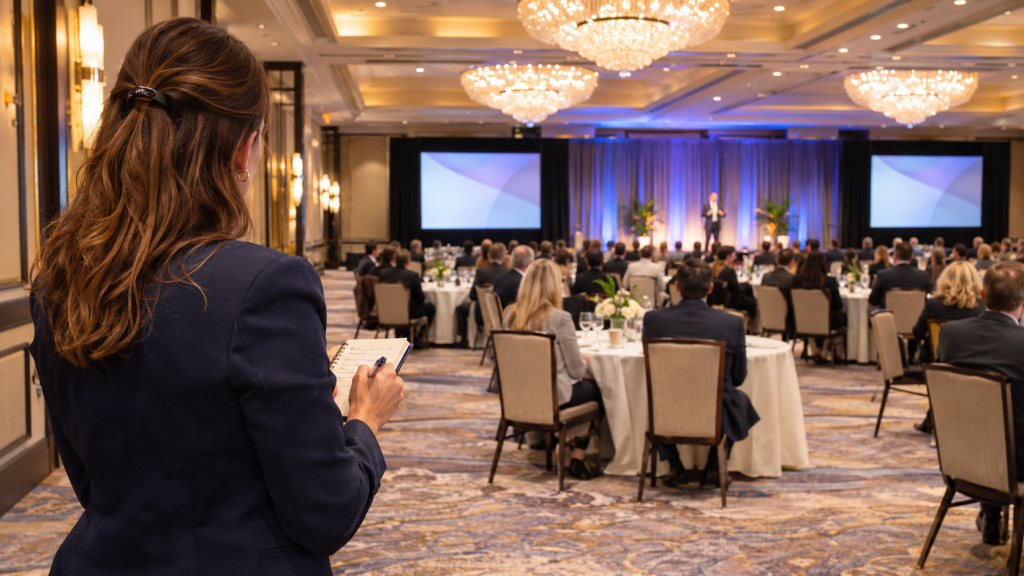
As an event planner, getting to visit the site of my next event in-person is one of the most helpful keys to pulling off a great meeting. Not only are site visits an opportunity to step into the attendee’s shoes, but they’re also a chance to get inspired by what makes the event location unique.
Here are my tips for making the most of your site visit – before, during and after.
Just Get It Down
As you’re planning an event, you should be asking yourself lots of questions. Things like “Can people walk from the hotel to our closing reception?” or “How will people get from our general session room to our education room?” I recommend finding somewhere to put down those questions. If you ask them, but don’t put them down, you’ll forget about them or keep asking them over and over again. If you’ve been doing that, then when it comes time for your site visit, you should have lots of little questions to follow up on.
Now You're Getting There
Traveling to the venue is your first chance to walk a mile in an attendee’s shoes. If you’re flying into an airport and grabbing an Uber to the conference location– is it a confusing 15-minute walk to the rideshare pickup? If so, could you include something in pre-conference materials for attendees in order to make it less confusing? I’ll never forget when I went to an event in Detroit only to arrive at the airport to realize I needed to:
- Spend 20 minutes figuring out where the rideshare was
- Find other attendees to split the $150 cost for an Uber
- Wait another 20 minutes to get picked up
- Sit through a 45-minute drive to our hotel.
Starting off my conference experience that way made me feel like the organization didn’t care about my experience, especially because they had provided a shuttle each time I attended in the past. If I were in the shoes of that event planner, I probably would have fought for having shuttles, providing attendees with a discount code, or offering an alternative method of transportation with lots of pre-event information.
Be Snoopy
If you’re lucky, you’ll be attending your site visit while another event is happening in the same space. That means you can see how another group is utilizing the space and find ideas to pull into your own event. Through this, I’ve found AV companies, centerpieces I didn’t know were available, digital billboards my event was allowed to use and even amazing local sign companies (Pro tip: Look at the back of signs you like for the printer’s name). Individually those aren’t earth-shattering finds, but putting them together can lead to a significantly better event.
Go Beyond the Venue
When you’re on a site visit, make sure you step outside the venue. See if there are restaurants nearby. If there aren’t any nearby, maybe you need to extend the time of that “on-your-own” lunch you have scheduled. Do your attendees like to grab a drink? Is there somewhere for them to go besides the hotel bar? Is there an area of the city you know attendees will want to go to? How will they get there? I recently had an event in Fort Worth, Texas, and one of the things we provided attendees were instructions on how to get from our hotel to the Fort Worth Stockyards (by hopping on a bus that stopped right in front of our hotel). We probably would not have done that had we not done a site visit where one of our volunteers personally investigated the route because he knew our attendees would want to go to the Stockyards.
Just Get It Down (Again)
This is as much a reminder for me as it is for you: keep writing things down. Knowing the route the bus takes to the Fort Worth Stockyards is no good if you don’t write it down and forget it when you get back home. And follow up too, whether that’s assigning tasks to other team members, calling the number on that business card you got, or sending photos of things you liked to your graphic designer.
Time to Put This Into Action!
I hope some of these tips will be useful to you. These best practices might be common sense, but it’s not common for all parts of an event to go the way they’re supposed to. The more investigative care you put in, the more forgiving your attendees will be towards the inevitable hiccups. Now go and be excellent!
Find more conference, meetings and event resources here.

Paul Bierman, CMP
Paul Bierman joined the RGI team in 2023 as Director of Education and Events. He has a Bachelor of Arts in Anthropology & Sociology with a minor in Interpretation Theory from Swarthmore College and is a Certified Meeting Professional (CMP). His skillset includes registration management, working with boards of directors and creating budgets.