

Strong leadership drives organizational success, and diverse leadership drives innovation. For associations and management companies, building diverse leadership teams that reflect varied backgrounds, perspectives, and experiences isn’t just about doing what’s right—it’s about doing what works. Research consistently shows that organizations with diverse leadership outperform their peers in problem-solving, decision-making, and member engagement. As association professionals, we have a unique opportunity to model inclusive leadership that strengthens our organizations, better serves our members, and creates pathways for emerging leaders from all backgrounds. Whether your organization is just beginning its diversity journey or looking to deepen existing efforts, implementing thoughtful diversity strategies in leadership positions will deliver measurable benefits that strengthen every aspect of your association.
What is Diversity?
Diversity alone refers to the variety of backgrounds and identities held by an individual. But there are many different ways diversity can be implemented and utilized in the association workplace. Diverse characteristics can be personal differences such as gender, race, ethnicity, nationality, age, or diversity can derive from more professional qualities like professional experiences, educational background, training, and one’s network of connections. While everyone has unique qualities, organizational diversity focuses on bringing together people with different lived experiences who offer distinct perspectives on challenges and opportunities applicable to the challenges associations are likely to face. The value of diversity lies in the understanding that not everyone sees the world the same way. Associations and management organizations should use that variety to their benefit, pulling from a wider range of backgrounds to apply creative, innovative, and relevant solutions to new questions.
Why Do We Need Diversity Within Leadership?
It is imperative to represent a diverse set of individuals within every rank and position in an association or management company, but diversity in leadership positions is especially critical. Members and employees need to see themselves reflected in leadership to feel confident that their own perspectives will be heard and valued. Diversity in leadership strengthens association governance and guides best practices that support a diverse membership. Leadership is there to represent the people they act and speak on behalf of and should therefore be a reflection of the individuals they serve. Diverse leadership also creates a ripple effect, encouraging diversity throughout the organization and fostering a more inclusive and productive environment.
Benefits of Diversity in Leadership
There are many benefits of diversity being implemented and seen in leadership. Beyond representation, diverse leadership teams generate more innovative solutions to complex problems. It can be easy to fall back on past methods and solutions that have worked well enough before, but with the introduction of new voices, outdated approaches can be replaced with meaningful improvement. Diversity in leadership means you are pulling from a wider range of backgrounds, interests, expertise, and perspectives that can be used to drive innovation, creativity, and well-rounded decision making. Diverse leaders better connect with diverse membership bases, expanding an organization’s reach and relevance.
Diversity in leadership provides a sense of comfortability within the workplace or association. People are more likely to contribute to a shared goal when they feel included and seen. This creates a more inclusive workplace environment that fosters opportunities through unity, collaboration, shared growth, and a stronger company or association identity. Strategic diversity initiatives consistently deliver positive outcomes when implemented thoughtfully and sustained over time.
How Do I Encourage Diversity in Leadership?
The first step to adding diversity is understanding where your starting point is. You can’t chart a path forward without knowing where you stand today. Look inward – see areas where you can improve and start there. Are there any barriers to entry? Any unspoken rules within culture or policy that creates a blockage where diversity is inadvertently excluded? Good places to start looking and improving are usually embedded within the recruitment process. Be sure the job descriptions and recruitment opportunities foster a wide range of diverse applicants. Be transparent about your progress and ask members or employees for their feedback through surveys and internal progress reports.
Another way to encourage diversity is to train people already involved in your organization with bias training. This can be simple and cost effective, but significantly shifts how your organization approaches inclusion. Developing inclusive policies and writing DEI into the foundation of an organization are also great ways to ensure that diversity is not only welcome but expected.
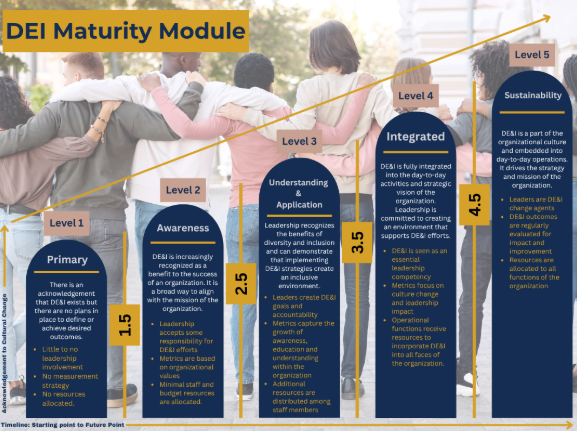
Take a look at RGI’s DEI Maturity Module to get an idea of which level your association falls into. This graphic outlines the stages of an association’s DEI development and realization. “Maturity” refers to the level at which DEI is implemented and successfully put into action.
Moving Forward
Building diversity in leadership is an ongoing commitment that evolves as your organization changes and grows. The associations that thrive in the coming years will be those that intentionally cultivate diverse voices in leadership, from board positions, to governing committee chairs, to executive and management roles.
We all have an important role to play in an organization’s diversity efforts. Start where you are today. Assess your current leadership composition, identify specific barriers to entry, and commit to one concrete action. Whether that’s revising your nomination process, implementing bias training, or creating mentorship programs for underrepresented members, there are so many ways diversity in leadership can benefit your organization. Plus, share your goals with your membership and invite their input on the journey!
Diversity in leadership isn’t just about representation; it’s about unlocking the full potential of your association. When leaders bring different lived experiences to the table, your organization becomes more creative, responsive, resilient, and better prepared for change. Every association should be working to make meaningful progress by prioritizing diversity in leadership. The members, mission, and organization’s future success depend on leaders who can approach challenges from multiple perspectives and craft solutions that serve everyone. The work starts now, and the impact will last for years to come.
Sources

Natalie Crispin
Natalie joined RGI in 2025 as an Education and Membership Coordinator. A Purdue University graduate with degrees in Art History and History, she previously worked in Indiana art galleries managing collections, coordinating events, and engaging the public. She also completed a study abroad program in England focused on museum operations and educational programming.
At RGI, Natalie enjoys building relationships with members and supporting meaningful experiences that strengthen engagement and growth. She values communication, connection, and community, contributing both at events and behind the scenes.
In her spare time, she enjoys reading, music, and exploring the Indianapolis arts community.